
The Future of Bluegrass: Why Supporting Young Musicians Matters
At festivals, jams, and campgrounds across Oregon, it's easy to focus on the musicians on stage. But some of the most important moments in bluegrass happen away from the spotlight—when an experienced player takes time to encourage a young musician, invites them into a jam circle, or spends some time picking together after a show.
Ten-year-old Juniper from Myrtle Creek — just outside of Roseburg, Oregon — is a perfect example of why these moments matter.
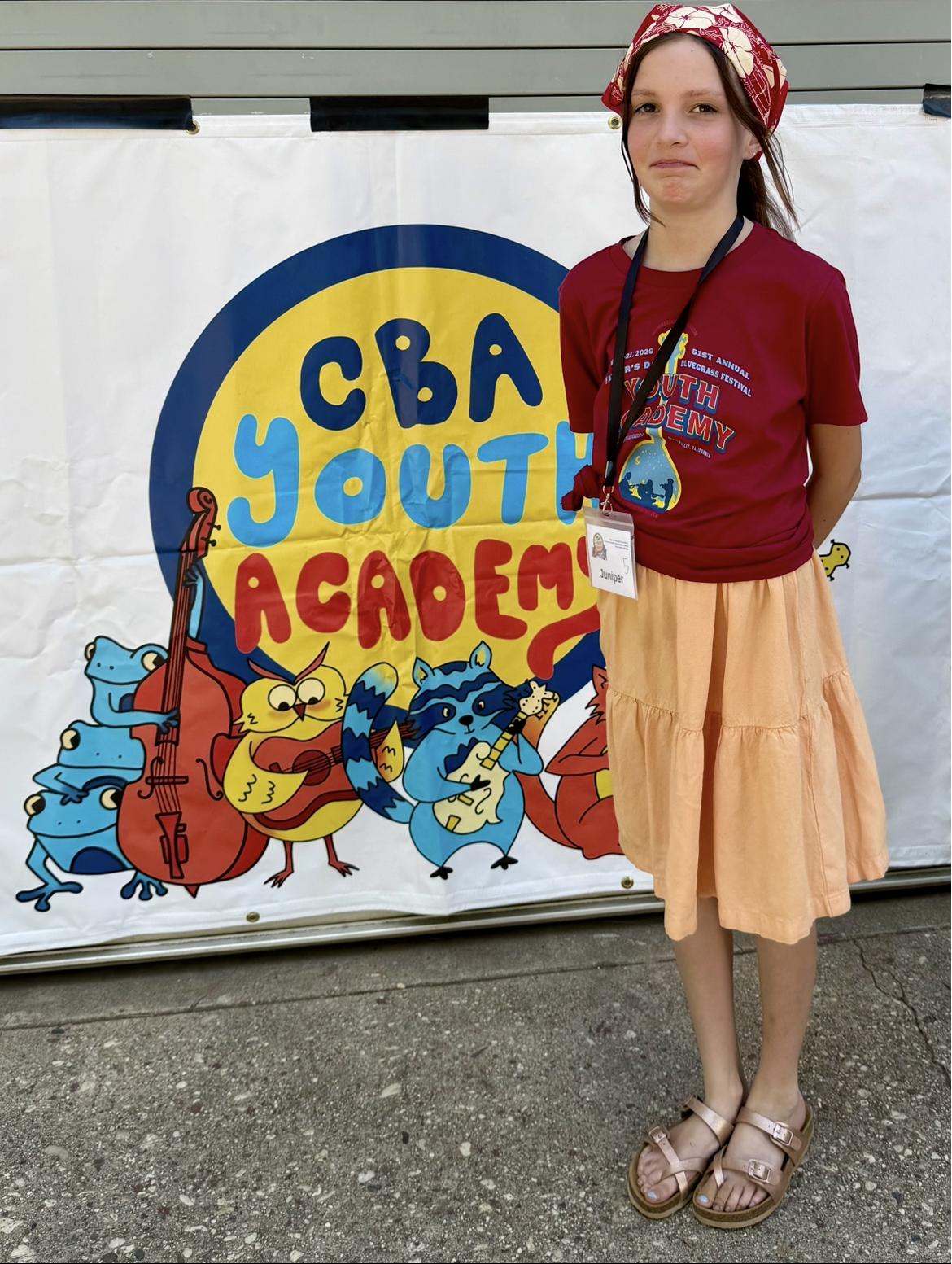
Just a year ago, Juniper attended a concert featuring Brothers Comatose and AJ Lee with her family. Inspired by the music, she picked up a mandolin that her grandfather bought for her and began taking lessons through the Oregon Old Time Fiddlers Association. What started as curiosity quickly became a passion.
Today, Juniper practices every day, attends jams whenever she can, and has already experienced something that makes the bluegrass community special: musicians welcoming young players as peers.
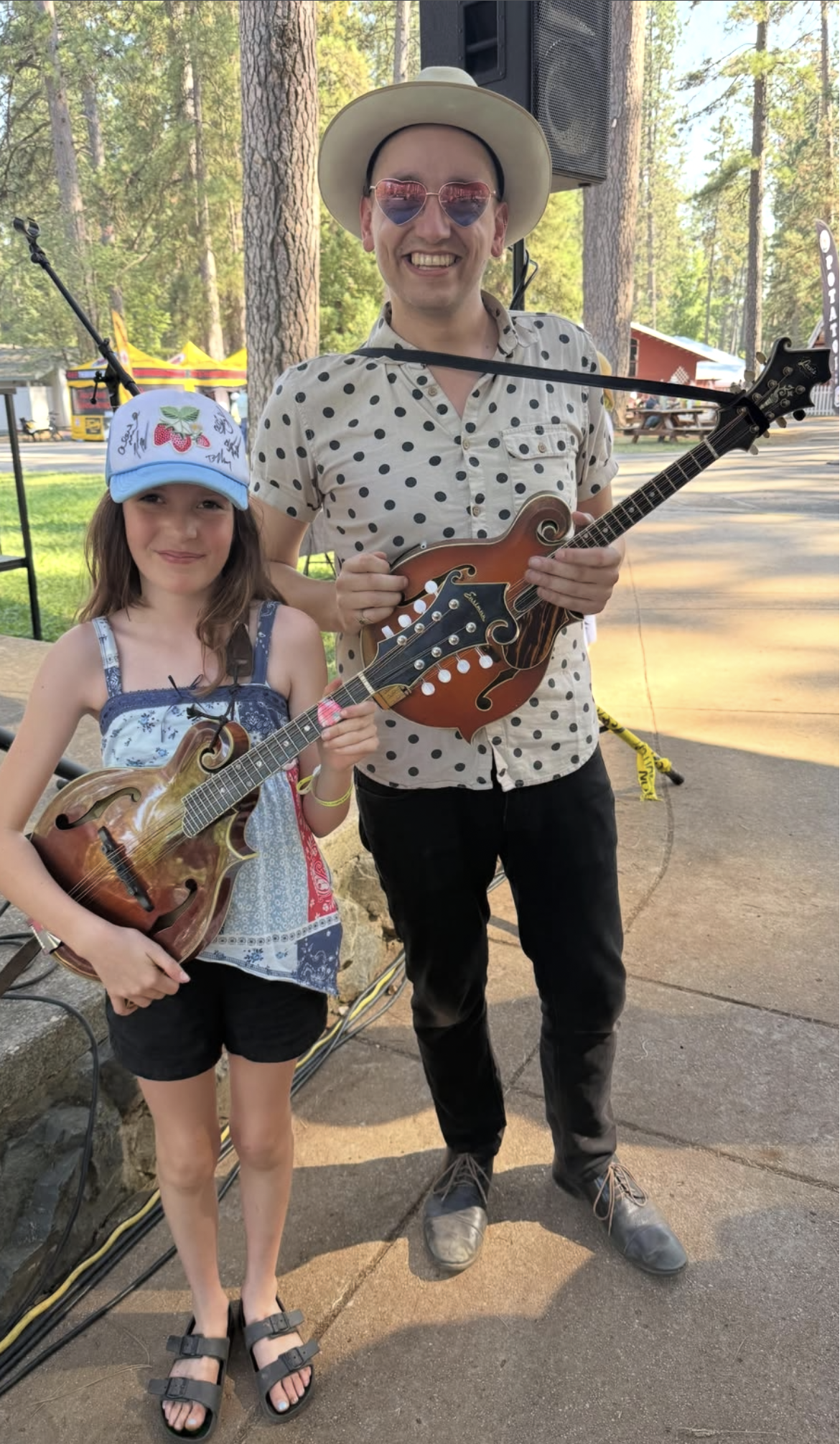
At this year's California Bluegrass Association Father's Day Festival, Juniper spent time jamming with musicians she admires, including Scott Gates.
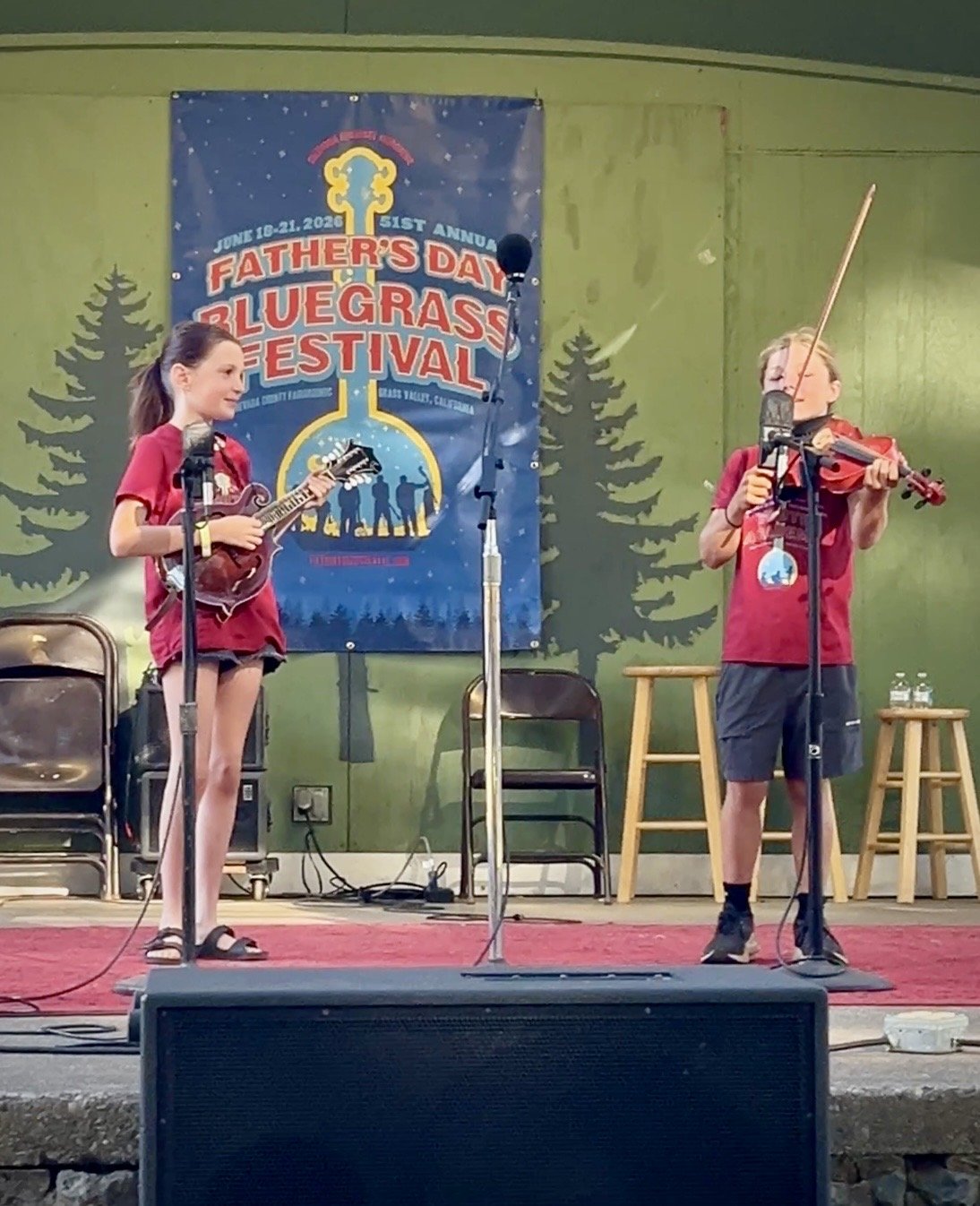
Through youth programs and jam sessions, she has met other young pickers like 11-year-old Xylem, building friendships rooted in music. She talks about how much she enjoys playing with others and how much she learns simply by joining a circle and listening.
What stands out most in Juniper's story is not just her dedication, but the encouragement she has received from the bluegrass community. Professional musicians like Addie Levy, Kaden from Never Come Down, and members of Brothers Comatose have taken the time to talk with her, pick with her after shows, and make her feel welcome.
For a young musician, those interactions can be transformative. Many of us can remember the first time an experienced player invited us to join a jam or showed us a new chord progression. Those moments build confidence, create belonging, and often determine whether a young person continues their musical journey.
Bluegrass has always been passed down person-to-person. It survives not because of recordings or stages alone, but because musicians share what they know with the next generation. Every time we slow down a tune for a beginner, invite a young picker into a circle, donate an instrument, support a youth academy, or simply offer a word of encouragement, we help ensure the future of the music we love.
As Juniper looks ahead to performing on stage, attending festivals, and someday playing in a band, her story reminds us that Oregon's bluegrass future is already here. It is sitting in our jam circles, attending workshops, and carrying mandolins, fiddles, banjos, and guitars that may seem almost too large for their small hands.
The responsibility—and the privilege—belongs to all of us. By creating welcoming spaces, supporting youth programs, and encouraging young musicians wherever we find them, we aren't just helping individual children succeed. We are investing in the future of bluegrass itself.
The next generation is listening, learning, and ready to play. Let's make sure they have a place in the circle.
-Written from an exclusive interview with Juniper
